Resources · The Library
The resources library for teams that run on kept promises.
Governed guides and playbooks for booking-led operations. Each piece answers one operating question, carries an author and a review date, and ends in a next action — nothing here exists to fill a page.
6 governed guides · productivity, studios, clinics, multi-location · updated as the product moves
CHOOSE A PATH
Three ways in, depending on what you're doing this week.
PATH 01
I'm evaluating booking software
Understand the real cost of the schedule you have now, then read the procurement-grade guides.
Start at Why QUEPATH 02
I'm rolling out a new workflow
Map your service model first, then adopt the weekly ritual that keeps the record trustworthy.
Map it on FeaturesPATH 03
I run a booking-led team
Keep one standard alive across chairs, rooms, and locations with the operating guides for your shape of business.
FEATURED — WHERE MOST TEAMS SHOULD START
The three pieces that change how a team reads its own week.
They answer the three questions we hear most: why does my team feel slower than the headcount suggests, what should I actually review each week, and what does the schedule cost me when it's manual?
How appointment management quietly decides your productivity
The silent failures inside a booking system, and the weekly loop that turns appointment management into a productivity engine.
Read the guide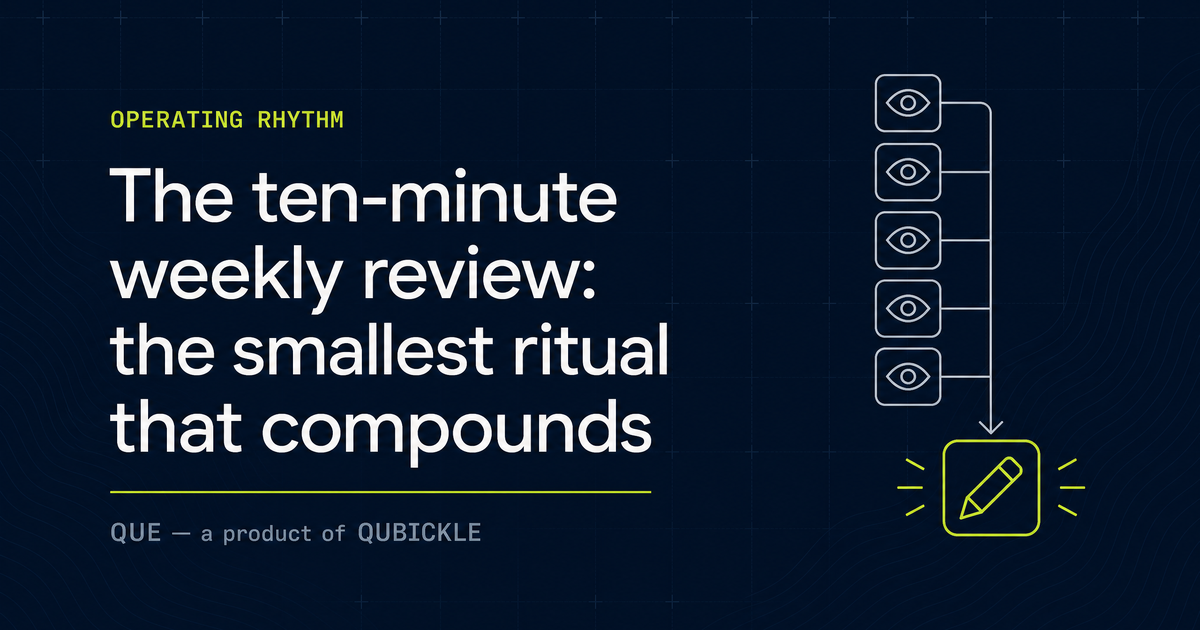
The ten-minute weekly review: the smallest ritual that compounds
Five reads of the record, one written change, thirteen weeks. The smallest ritual a time-based business can run.
Read the playbook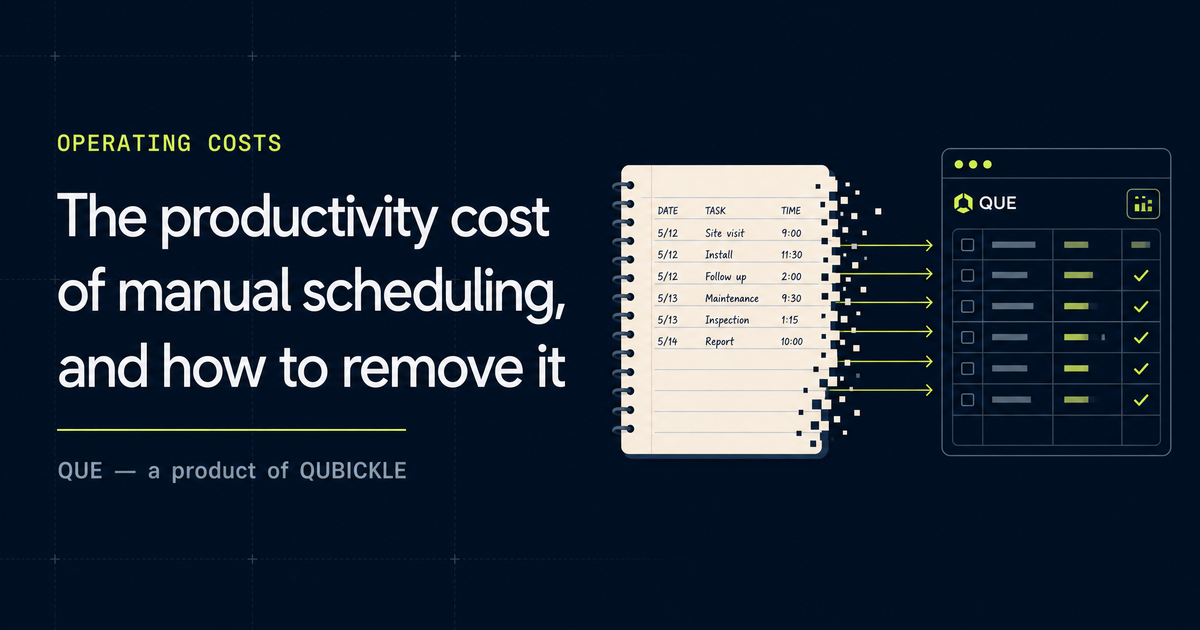
The productivity cost of manual scheduling, and how to remove it
A toll ledger for the hours manual scheduling leaks — and the removal path that closes them.
Read the guideTHE FULL LIBRARY
Every guide, filterable in ten seconds.
How appointment management quietly decides your productivity
The silent failures inside a booking system, and the weekly loop that turns appointment management into a productivity engine.
Read the guideThe ten-minute weekly review: the smallest ritual that compounds
Five reads of the record, one written change, thirteen weeks. The smallest ritual a time-based business can run.
Read the playbookThe productivity cost of manual scheduling, and how to remove it
A toll ledger for the hours manual scheduling leaks — and the removal path that closes them.
Read the guide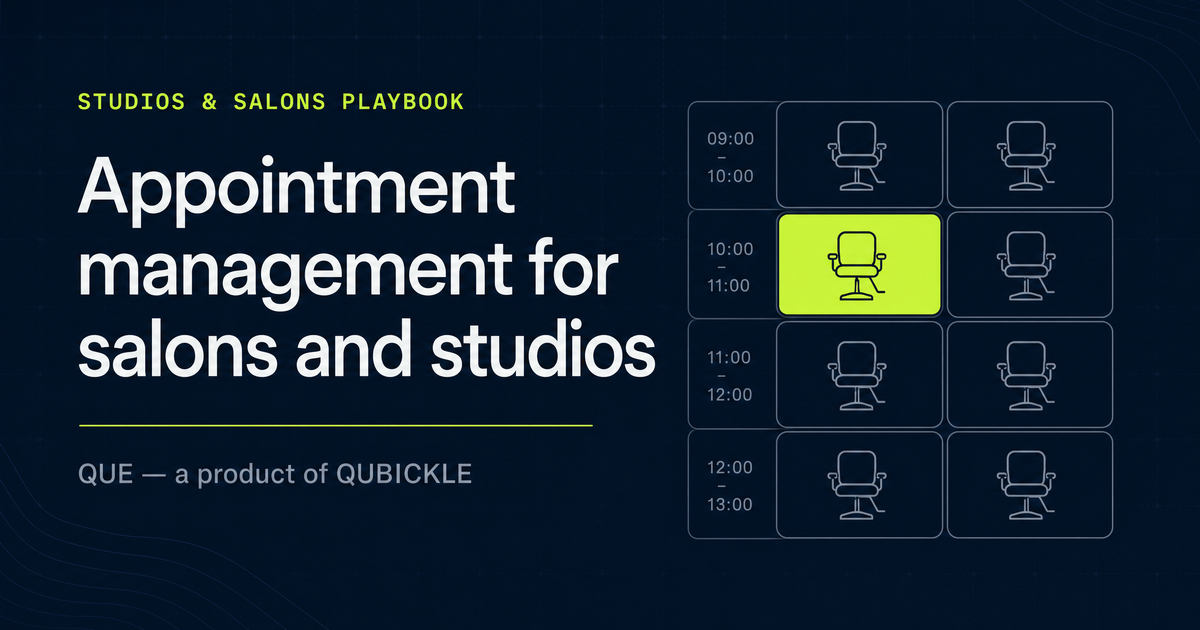
Appointment management for salons and studios: a productivity playbook
Availability, buffers and turnovers, group bookings, and the no-show question — for the chair-and-room business.
Read the playbook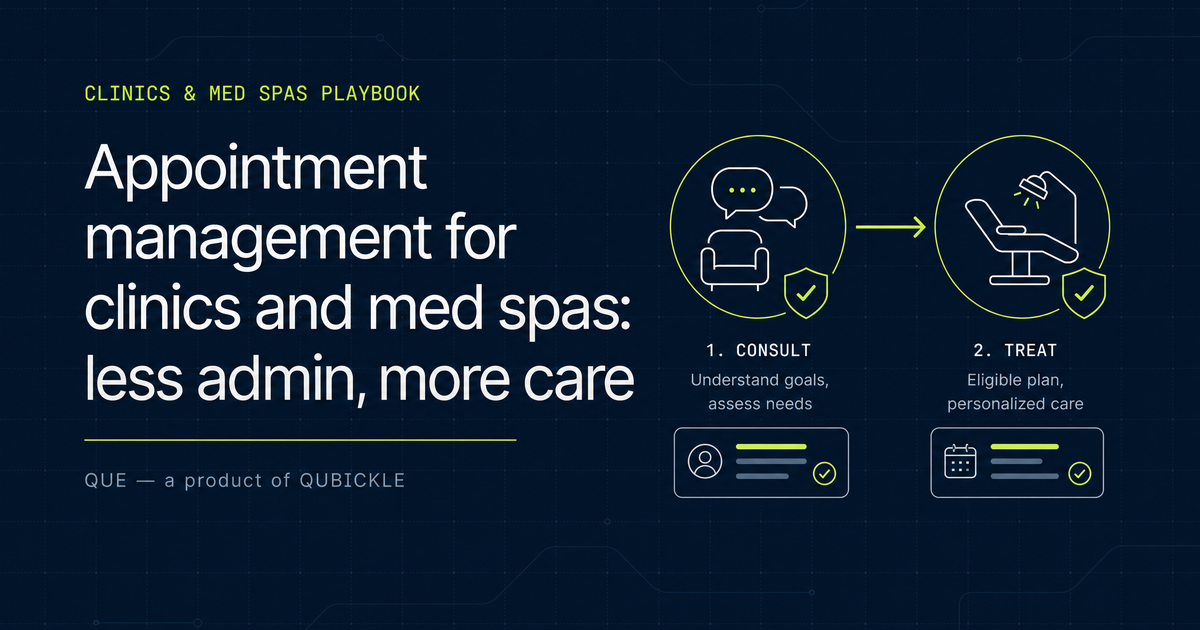
Appointment management for clinics and med spas: less admin, more care
Eligibility, room and equipment constraints, prep chains, and multi-step programs — scheduling as part of the care.
Read the playbook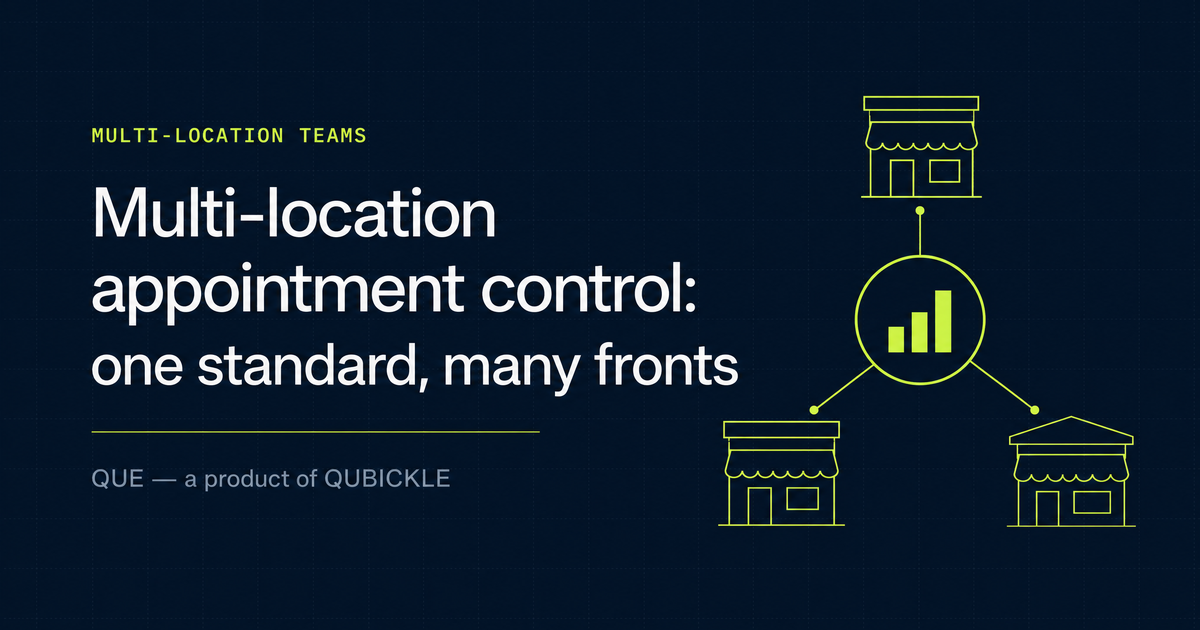
Multi-location appointment control: one standard, many fronts
Availability, policy versus exception, mobile staff, and the rollout sequence that keeps one standard alive.
Read the guideFORMATS — WHAT EACH PIECE IS FOR
A library is only useful if you know what you're picking up.
Guides
A structured read that takes one operating problem — availability, no-shows, manual scheduling cost — from first principles to a decision. Read when you want to understand before you configure.
Playbooks
A business-shaped route map: how a studio, clinic, or multi-location team should run appointment management given their real constraints — chairs, rooms, eligibility, and mobile staff.
Checklists
A compact verification pass over the record: the questions to ask of your booking data before rollout, procurement, or a weekly review. Short enough to run, specific enough to act on.
Every piece carries an author, a last-reviewed date, and an evidence boundary. Operational guidance is separated from product claims, illustrative examples are labeled, and nothing is published to inflate a counter. When the product moves, the library is reviewed — not preserved as archaeology.
FROM READING TO OPERATING
The map from a question to a working week.
Understand the cost
Before choosing anything, know what the current schedule costs: leaked hours, stalled enquiries, and the collisions nobody writes down.
The productivity cost of manual schedulingMap your shape
Studios, clinics, and multi-location teams fail differently. Pick the playbook written for your constraints — chairs, rooms, eligibility, or distributed staff.
See how QUE models each shapeRun the ritual
A trustworthy record plus a ten-minute weekly review is the whole operating loop. Small enough to survive a busy week, fixed enough to compound.
The ten-minute weekly reviewRESOURCE FAQ
What the library is, and how to get the most out of it.
What should I read first if I'm new to appointment management?
Start with “How appointment management quietly decides your productivity”. It defines the four-part weekly machine (enquiries, confirmations, delivery, evidence) that the rest of the library builds on, and it costs nineteen minutes.
Are these resources specific to one industry?
The core guides are industry-neutral, and the playbooks are written for specific operating shapes: studios and salons, clinics and med spas, and multi-location teams. Each playbook stays inside its business's real constraints rather than generic advice.
Is there content for technical evaluators, not just operators?
Yes. “The productivity cost of manual scheduling” reads like a toll ledger an evaluator can use, and the /docs and /security surfaces carry the technical and trust material that a procurement review needs.
How do the resources relate to the blog and the documentation?
The Resources library points at governed editorial guides published on the Journal (/blog). Documentation (/docs) explains how the product works; resources help you prepare, compare, and decide before you configure.
How often is the library updated?
New guides land when there is a real operating question worth answering — the library is curated, not inflated. Every piece carries an author, a review date, and an evidence boundary, so stale material never pretends to be current.
WHAT'S NEXT
Read one guide. Run one week differently.
The library stays useful only if it changes something. Pick the piece that matches this week's hardest question, read it end to end, and let the record — not the meeting — carry the answer.